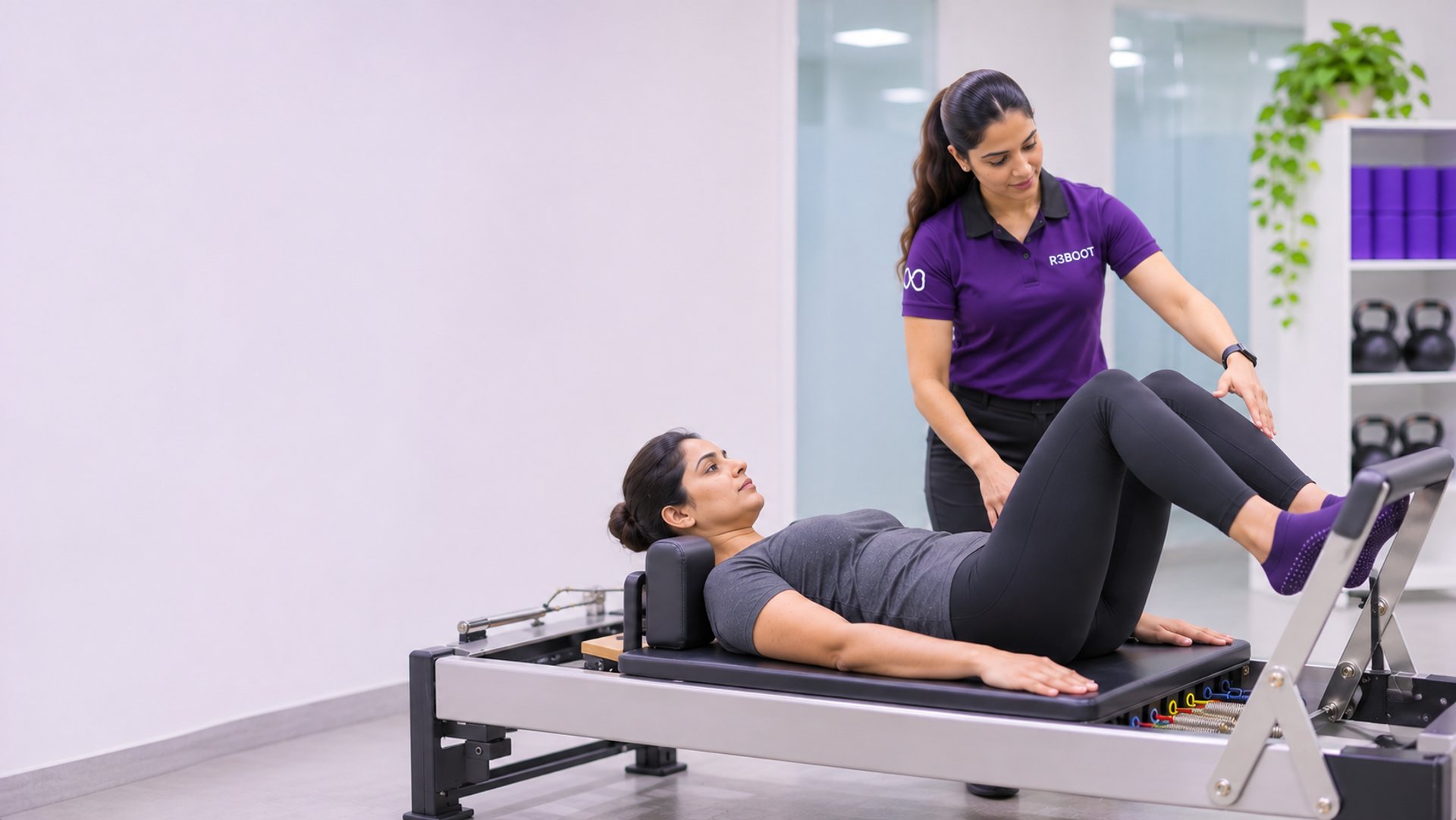
Reformer Pilates vs Clinical Pilates: Which One Do You Need?

Dr. Hiral Parikh
Published 5 November 2026 · Updated 17 November 2026
Author: Dr. Hiral Parikh, Lead Physiotherapist (BPT), R3BOOT Dadar, Mumbai
TL;DR: Reformer Pilates is a machine. Clinical Pilates is a physiotherapist-led method, and it can use that same machine. Choose a reformer class for general fitness. Choose clinical Pilates if you have pain, an injury or surgery behind you. Research supports Pilates for back pain, but not as better than other good exercise. Assessment and supervision make the real difference.
Reformer Pilates vs clinical Pilates sounds like a choice between two styles. It isn't. A reformer is equipment: a sliding carriage with springs. Clinical Pilates is an approach: a physiotherapist assesses you first, then designs and watches your exercises.
So the real question isn't "which machine?" It's "who is planning my session, and what is it for?"
That matters in Mumbai, where many studios use the word "clinical" loosely. Below you'll get a plain comparison, a quick way to decide, and what the research does and doesn't say. If you're still choosing between equipment, our guide to reformer versus mat Pilates covers that part.
Is Reformer Pilates the Same as Clinical Pilates?
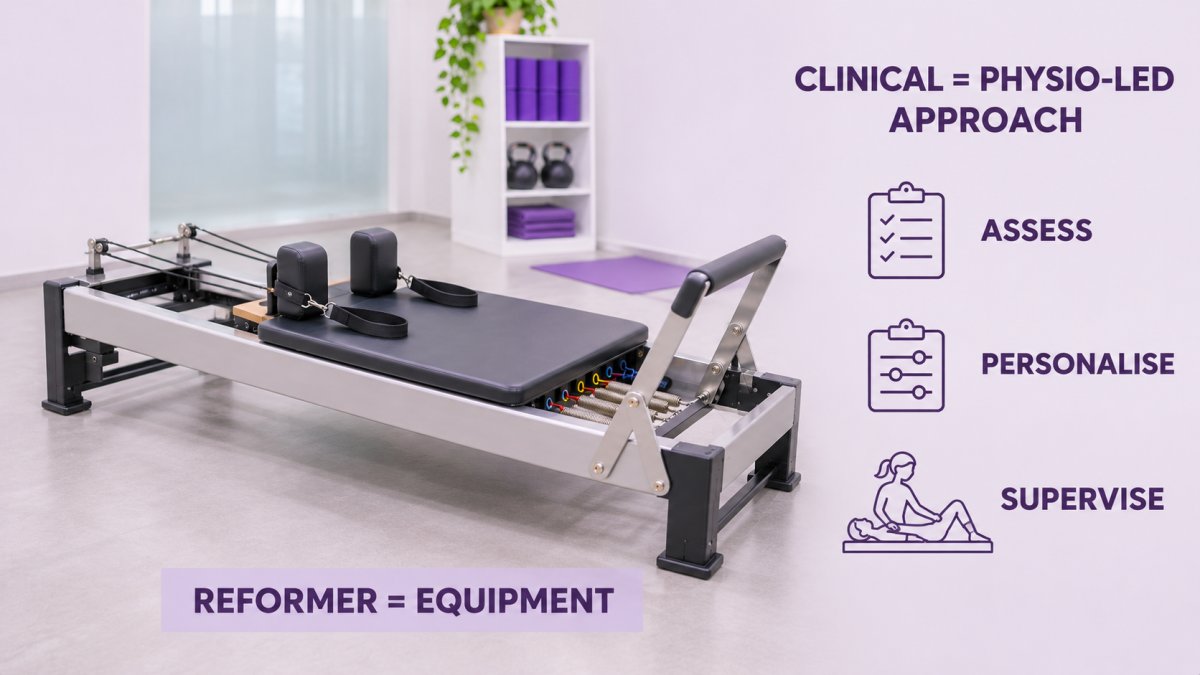
No. Reformer Pilates describes the equipment: a spring-loaded sliding carriage. Clinical Pilates describes the approach: a physiotherapist assesses you, prescribes exercises for your condition, and supervises them. The two overlap, because clinical Pilates often uses a reformer, but a reformer class is not automatically clinical.
Think of it as two separate questions.
What equipment is used? A reformer, a mat, small props, or a mix.
Who leads, and why? In a fitness class, an instructor leads a set routine for general fitness. In clinical Pilates, a physiotherapist picks exercises based on what they find in your body. Physio clinics draw the same line between fitness Pilates and clinical Pilates, and clinic comparisons such as this one usually note that clinical sessions run smaller and more individual than packed reformer classes.
So you can do clinical Pilates on a reformer. You can also do reformer Pilates with no clinical input at all. The label on the machine tells you nothing. The person and process behind it tell you everything.
Reformer vs Clinical Pilates at a Glance
Here's how the two usually compare. "Typical" means what clinics and studios commonly describe. Not every studio fits.
| Typical reformer class | Clinical Pilates (physio-led) | |
|---|---|---|
| What it is | Group fitness class on reformers | Exercise prescribed and supervised by a physiotherapist |
| Who leads | Pilates or fitness instructor | Physiotherapist |
| Starts with | Often a short intake form | A physical assessment and goal-setting |
| Main goal | Strength, flexibility, general fitness | Pain relief, injury recovery, return to sport or work |
| Group size | Often a full class | Small groups or one-to-one |
| Equipment | Reformer only | Reformer, mat and props, chosen to fit you |
| Exercise choice | Set by the class plan | Set by your findings; changes as you recover |
| Intensity | Often higher | Matched to your healing stage |
| Cost per session | Usually lower | Usually higher |
| Best for | Healthy people who want a workout | Pain, injury, surgery, repeat niggles |
At R3BOOT in Dadar, sessions are one-to-one and physiotherapist-led, on the reformer and the mat. They are not group classes. If that last point is your main question, read our comparison of a group class versus private physio-led Pilates.
Which Should You Choose: Reformer Pilates or Clinical Pilates?
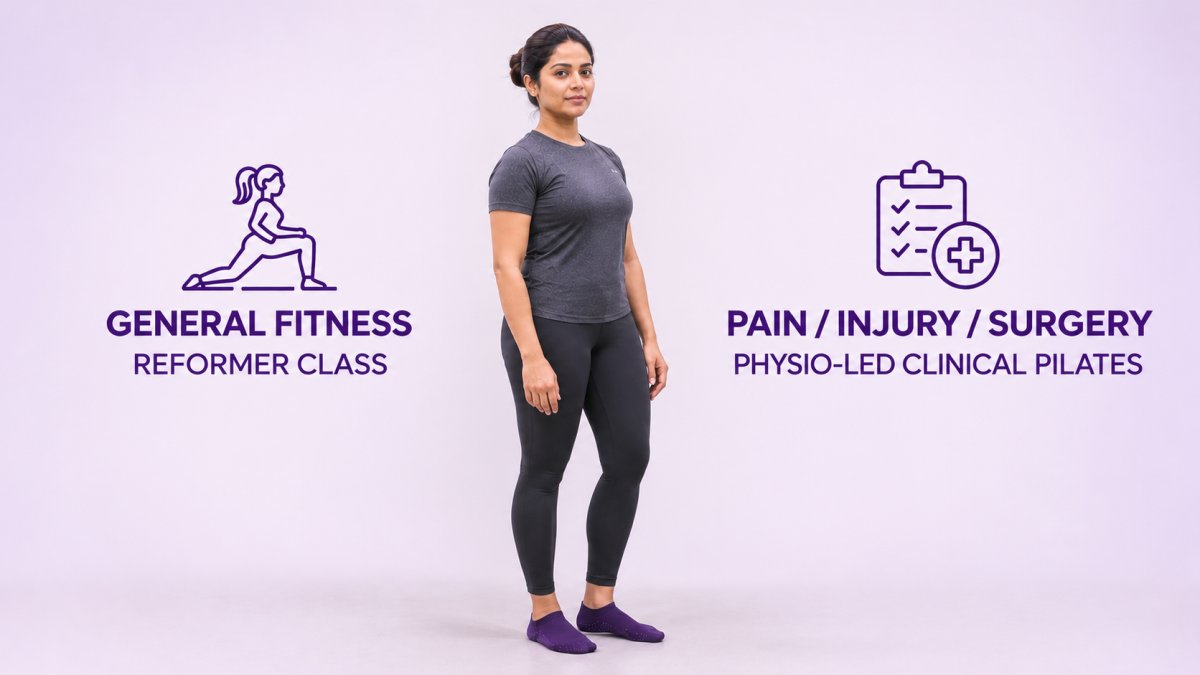
Choose clinical Pilates if you have pain, a recent injury, surgery or a condition that flares up. Choose a reformer class if you're healthy and want a workout. If you're unsure, start with an assessment: it tells you whether a group class is safe for you.
Pick clinical Pilates if you:
- Have back, neck, hip or knee pain that keeps coming back
- Are recovering from an injury or surgery
- Tried a group class and something hurt
- Are an athlete managing a niggle or returning to sport
- Want a plan that changes as you heal
Pick a reformer class if you:
- Are healthy, with no current pain or injury
- Want strength, flexibility and a scheduled workout
- Like class energy and a lower price per session
- Have checked with your doctor if you have any medical condition
Still unsure? Ask yourself three questions
- Does anything hurt during daily movement or training?
- Have you had an injury or surgery in the last year?
- Do you want someone to adjust your plan as you improve?
Any "yes" points to clinical Pilates. Three "no" answers mean a reformer class is a fair choice. Many people start clinical, get pain-free, then move to a group class later.
Does Clinical Pilates Work Better? What the Research Says
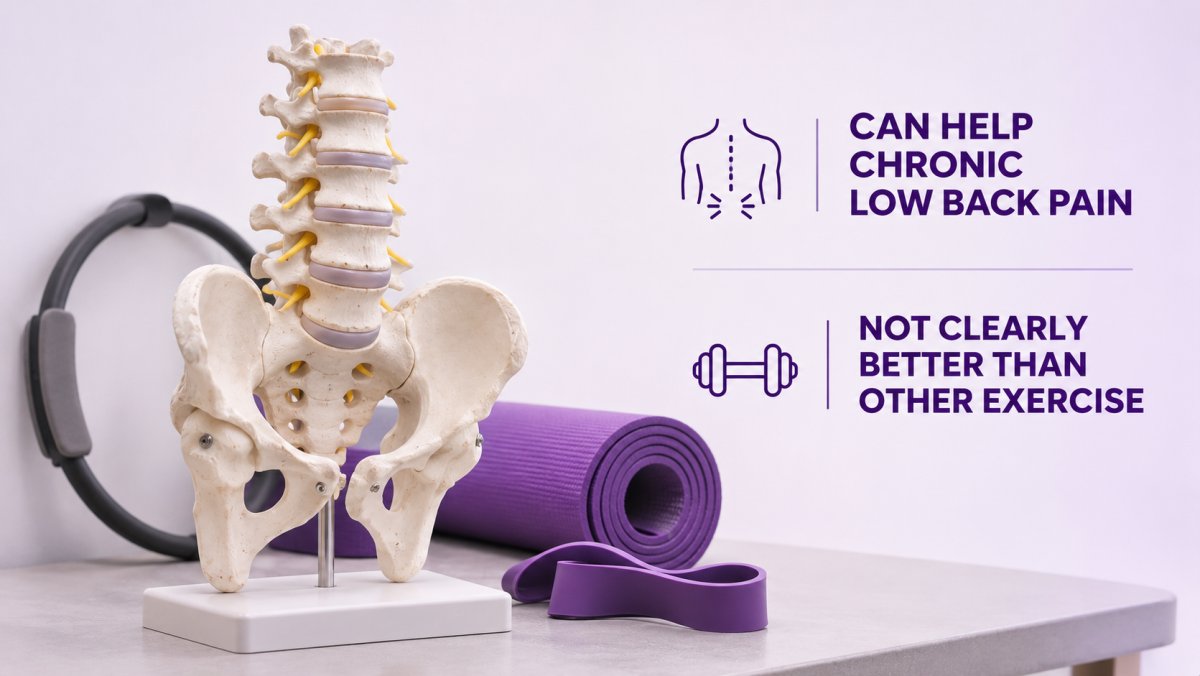
Pilates helps chronic low back pain in the short term compared with usual care. It isn't clearly better than other exercise or massage. We found no trial comparing clinical Pilates with reformer fitness classes directly, so the case for clinical rests on assessment and supervision, not proven superiority.
Here's what the studies show:
- A systematic review of 14 randomised trials found short-term gains for Pilates over usual care, with results similar to massage and other exercise. Trial quality ranged from poor to excellent.
- A review of earlier reviews called the evidence inconclusive, mainly because there were few studies and many were weak.
- A review of eight trials reported that other exercise gave similar effects when it included trunk movement and totalled about 20 hours.
What does that mean for you? Pilates is a good tool, not a magic one. What you can control is whether a qualified person checks your body first and adjusts the load. That's the clinical part. For a fair look at the limits, see what Pilates will not do.
What Happens in a Clinical Pilates Session at R3BOOT?
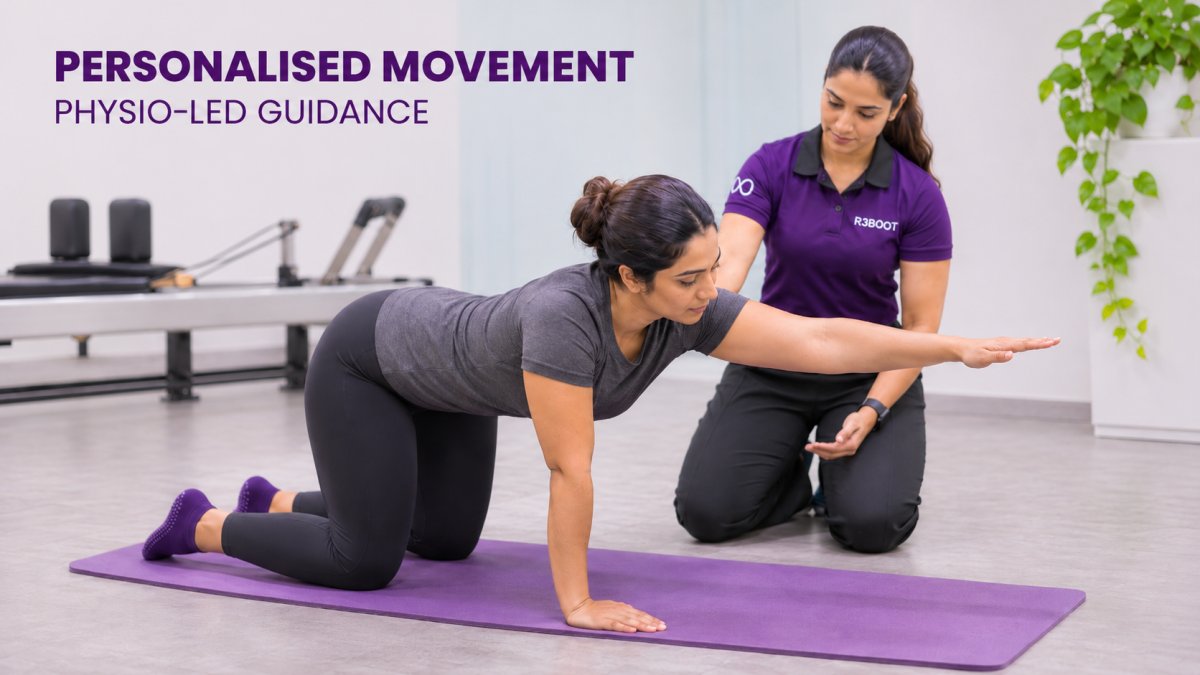
Every client starts with an assessment, not an exercise. Our physiotherapists look at your body, your weak spots, and your work or sport. If you're a batsman, for example, the plan is built around batting. Then the work moves through five steps:
- Assessment and goal setting. We find what's limiting you and agree what "better" means.
- Education and awareness. You learn the basics of movement and core control.
- Integration on mat or reformer. Controlled exercises, with spring settings matched to you.
- Functional, sport-specific training. Movements shaped to your sport or daily life.
- Re-assessment and changes. The plan is updated as you progress.
Sessions are one-to-one. A 45-minute reformer Pilates session costs ₹2,000. For a full price breakdown, see Pilates costs in Mumbai.
You can read more about Pilates at R3BOOT or the reformer Pilates service in Mumbai.
How Can You Tell If a Pilates Class Is Really Clinical?
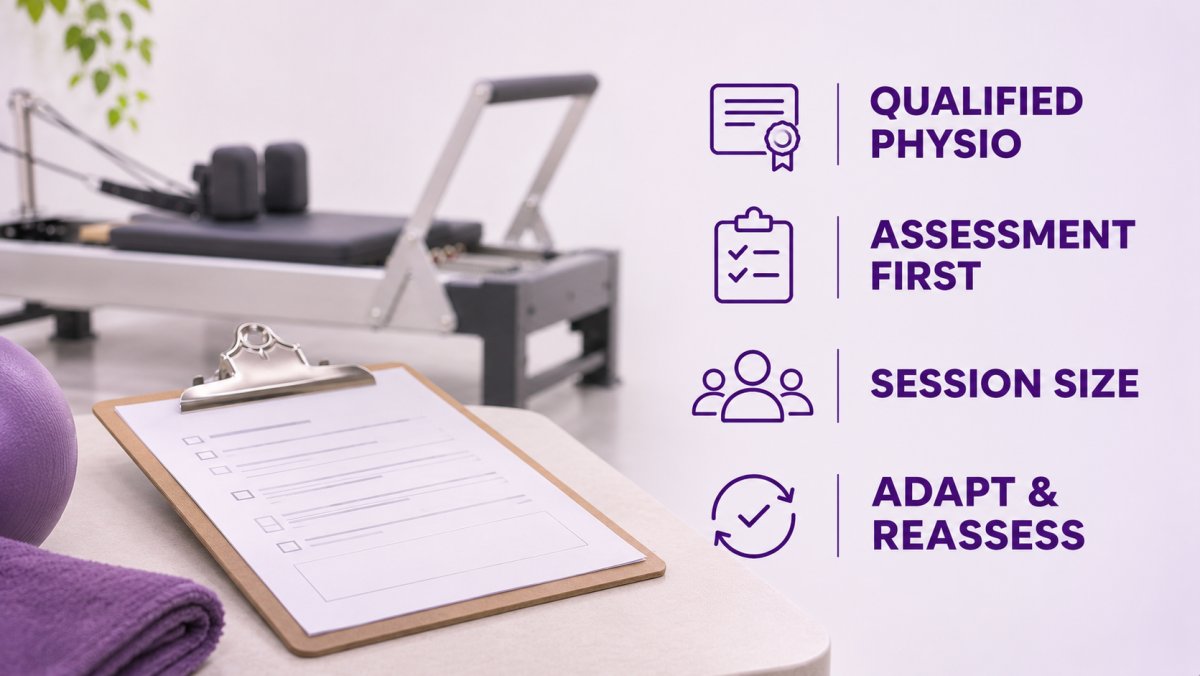
Ask who designs your program. A clinical session starts with a physical assessment by a physiotherapist, sets goals for your condition, and re-checks progress. If you get a standard class plan and no assessment, it's a fitness class, whatever the sign outside says.
Good fitness instructors exist, and a fitness class is fine if you're healthy. But if you have pain or an injury, ask these five questions before you book:
- Is the instructor a qualified physiotherapist? Ask for their qualification.
- Will you assess me before my first exercise?
- How many people will be in the room with me?
- What do you change if something hurts?
- When will you re-check my progress?
Vague answers are your answer. A clinical program should answer all five without hesitation.
Conclusion
Reformer Pilates is the machine. Clinical Pilates is the method. The right choice depends on your body, not the equipment.
- Pain, injury or surgery: start with clinical Pilates and an assessment.
- Healthy and after a workout: a reformer class works.
- Whatever you pick, check who is planning your session and whether they assess you first.
Not sure where you fit? Book an assessment at R3BOOT Dadar East, or WhatsApp +91 97023 68612. We'll tell you plainly whether you need clinical work or whether a group class is enough.
Physiotherapy in Dadar
Book the assessment, not another stretch routine
If this is changing how you walk, train, or sit at a desk, it belongs with a physiotherapist. R3BOOT is in Dadar East, 5 minutes from the station.
Physiotherapy at R3BOOT Dadar