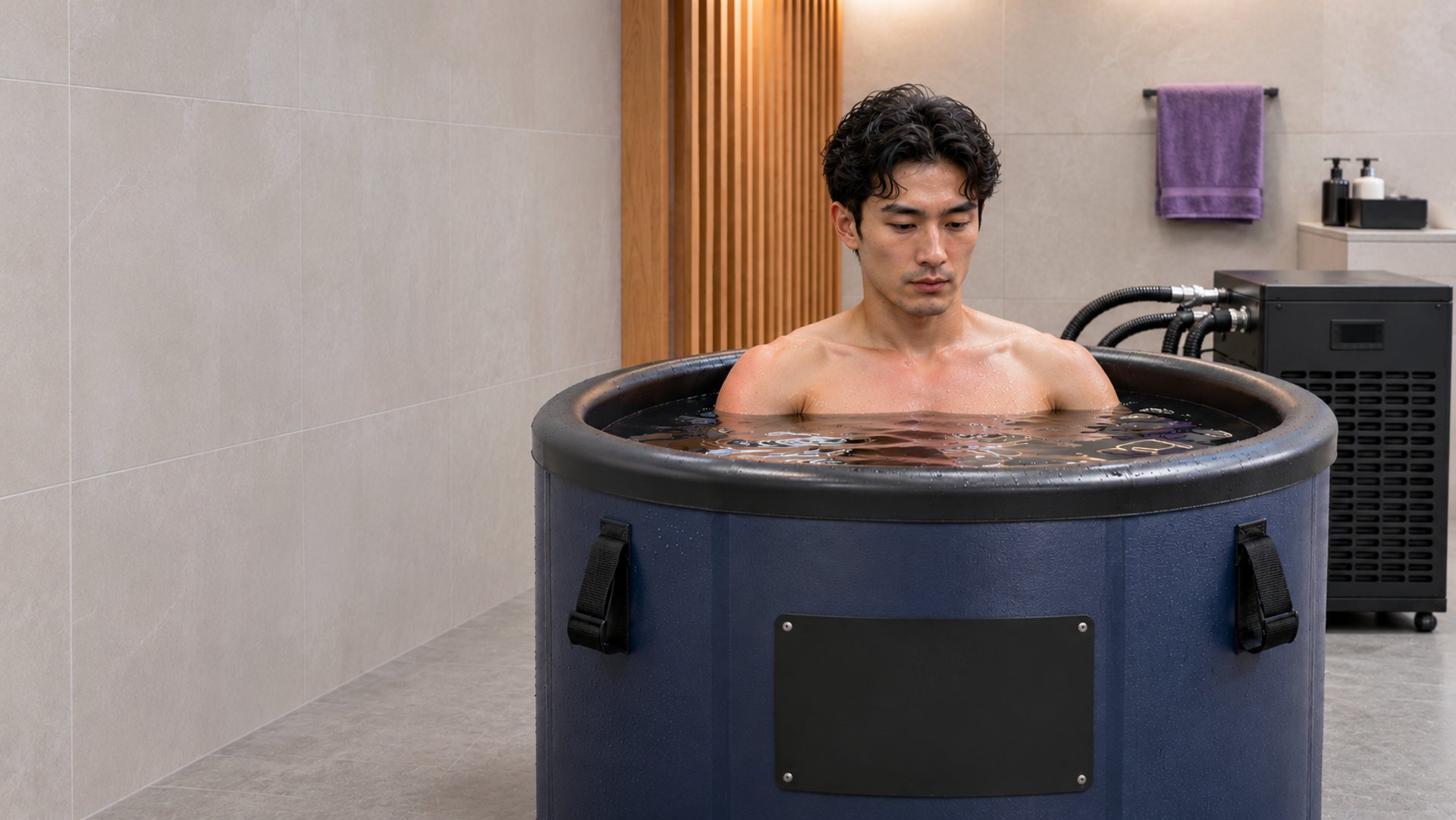
Cryotherapy vs Ice Bath vs Cold Plunge: Which One Is Worth It?

Dr. Hiral Parikh
Published 5 November 2026 · Updated 17 November 2026
Author: Dr. Hiral Parikh, Lead Physiotherapist (BPT), R3BOOT Dadar, Mumbai
TL;DR: An ice bath and a cold plunge are the same thing: sitting in cold water. Research shows it cuts soreness a little. Whole-body cryotherapy, a chamber of freezing air, has weaker evidence and bigger safety questions. For soreness between sessions, choose cold water. Skip it right after strength training. Check your heart and blood pressure first.
Cryotherapy vs ice bath: which is worth your money? Cold water has the better evidence. A whole-body cryotherapy chamber is the harder one to justify.
If you searched "cryo therapy" in India lately, you have probably seen chamber ads promising faster recovery. This guide separates what the research supports from what the marketing claims. We compare all three options, tell you who should skip cold exposure, and list what to ask before you pay.
One honest note: R3BOOT does not have a cryotherapy chamber. We do offer supervised cold plunge sessions, so we have a view. We have tried to let the research speak, including where it is weak for us.
At a Glance: Cryotherapy vs Ice Bath vs Cold Plunge
| Whole-body cryotherapy | Ice bath | Cold plunge | |
|---|---|---|---|
| What it is | Standing in a chamber of extremely cold air | Sitting in a tub of cold water, often with ice | Sitting in a tub of chilled water |
| Typical session | 2 to 3 minutes | About 10 to 15 minutes in research | About 10 to 15 minutes in research |
| Evidence for soreness | Insufficient or very low quality | Low quality, but positive | Same as ice bath |
| Main risks | Frostbite, burns, low oxygen with liquid nitrogen | Cold shock, heart rhythm problems | Same as ice bath |
| Cost | Varies widely. Ask for the per-session price | Cheap at home | Varies. Ask for the per-session price |
What Is the Difference Between Cryotherapy, an Ice Bath and a Cold Plunge?
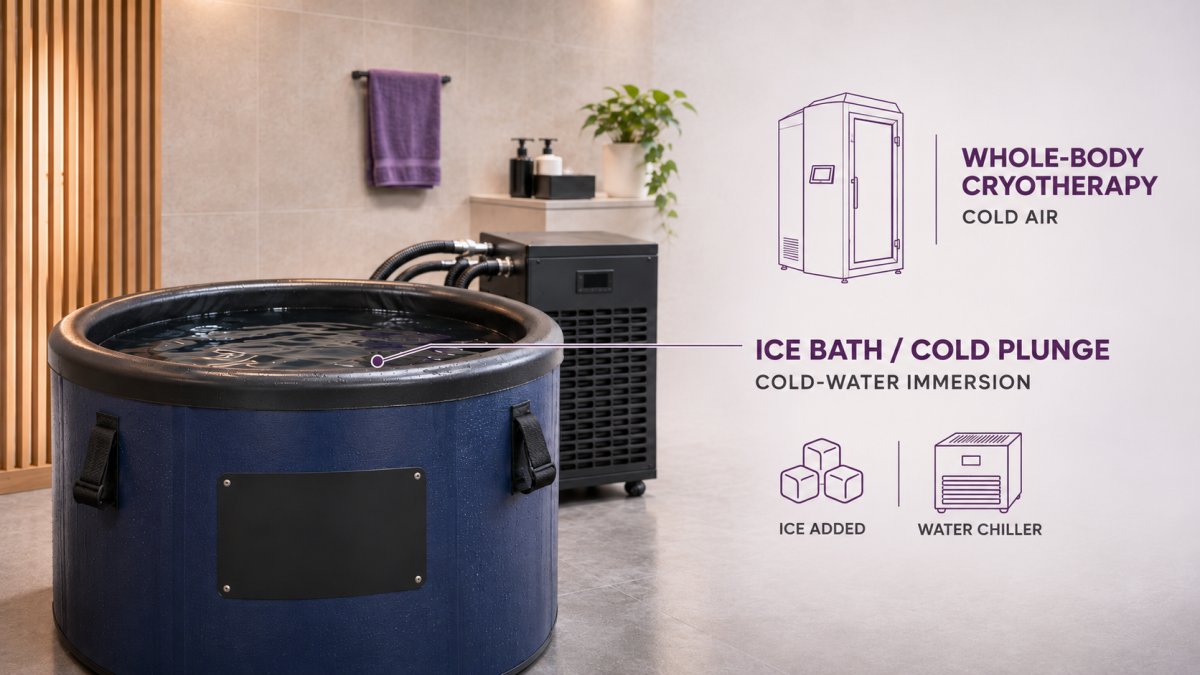
Whole-body cryotherapy means standing in a chamber of extremely cold air for two to three minutes. An ice bath and a cold plunge both mean sitting in cold water. The names differ, the method does not. The real choice is cold air versus cold water.
Chamber sessions are short. A technical chapter on the method describes contact times of up to three minutes at gas temperatures far below freezing.
"Ice bath" is the older sports-medicine term. "Cold plunge" is the wellness-industry term, and it usually means a tub with a chiller instead of loose ice. At the same water temperature, your body responds the same way. For a deeper look at how cold fits with heat, read our guide on ice bath vs contrast therapy.
Does Whole-Body Cryotherapy Work for Recovery?
The evidence is weak. A Cochrane review found insufficient evidence that chamber sessions reduce soreness or improve recovery in active adults. Later reviews are kinder but say study methods vary too much for firm advice.
Here is the picture in plain terms:
- Cochrane (2015): Soreness findings were rated very low quality. The trials used different temperatures, session lengths and exercise types.
- A later review (2017): It suggested repeated exposures may help recovery from muscle damage, but the authors called any specific recommendation preliminary.
- Safety: In 2016 the US FDA warned consumers. It said it found little evidence of benefit and listed asphyxiation (especially with liquid nitrogen), frostbite and burns as risks. Some researchers said the warning was too broad, because not all chambers use the same cooling method.
That is not proof that a chamber does nothing. It means nobody has shown it beats a cheaper tub of cold water.
Do Ice Baths and Cold Plunges Work?
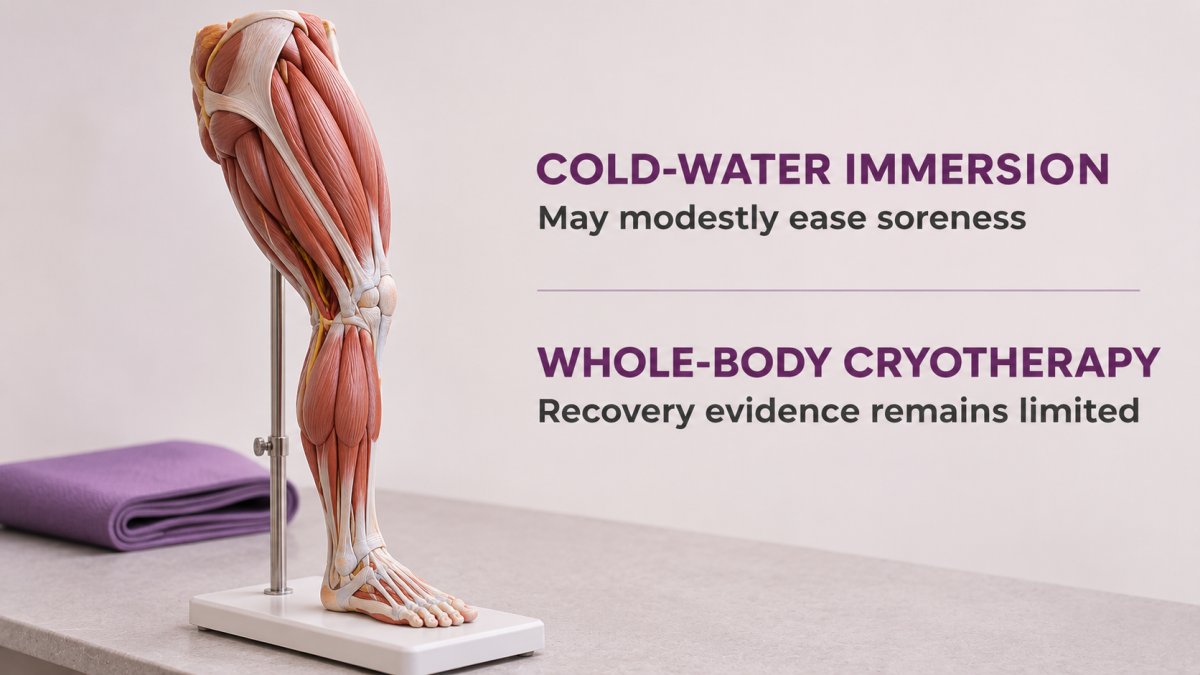
Yes, modestly. A Cochrane review found cold water immersion reduced muscle soreness one to four days after exercise compared with rest. The evidence was rated low quality, so treat it as a useful tool, not a miracle.
What the research suggests about the dose:
- Temperature and time: A meta-analysis of nine trials found water around 10 to 15 °C worked best for soreness. Benefit over rest was small.
- Compared with other methods: The Cochrane authors found no clear difference against contrast immersion, warm water or active recovery with compression.
- Best fit: Cold water makes the most sense when you must perform again soon, such as back-to-back match days. Our guide on when to ice bath after a workout covers timing.
When Cold Water Gets in the Way
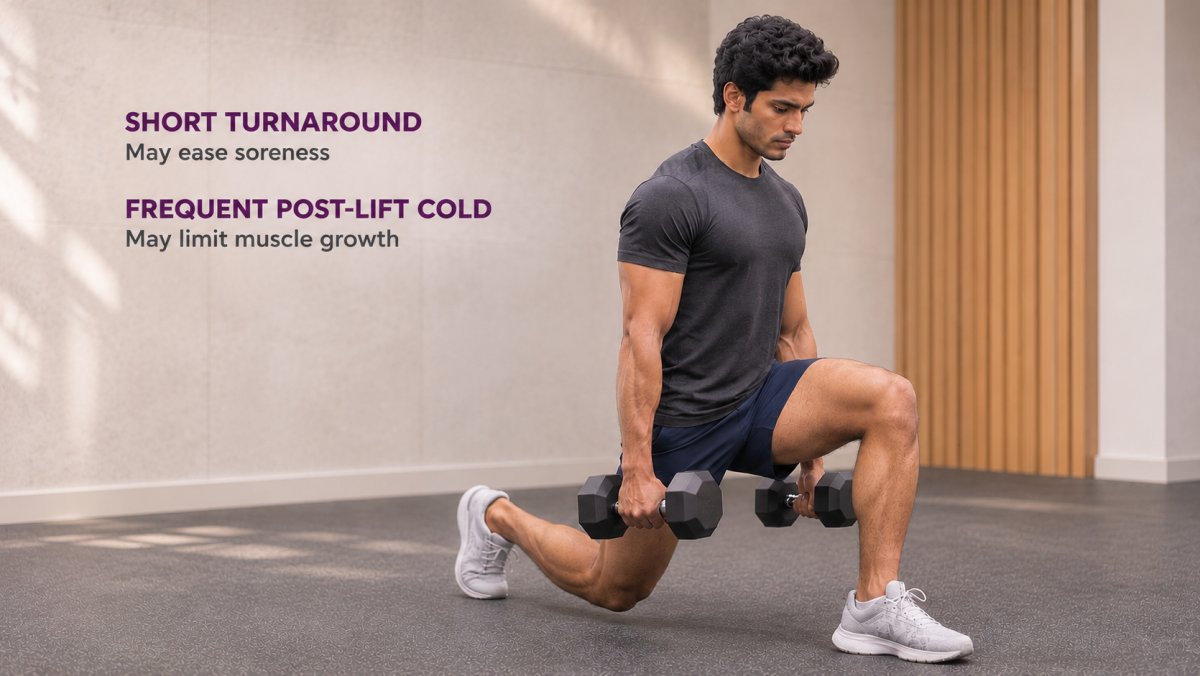
If you are building muscle, a daily post-lift ice bath may work against you. One trial found cold water immersion blunted muscle fibre growth but not maximal strength after resistance training. A 2021 review of the topic reached a similar view, while noting the molecular evidence is limited.
So match the tool to the goal. Recovering to perform again soon? Cold helps a little. Trying to gain size? Keep cold away from your lifting sessions.
Which One Should You Pick?
Pick the option that fits your goal and your health, not the one with the best ad.
- Sore between matches or training days: Cold water, an ice bath or cold plunge. Keep sessions around the 10 to 15 minute range used in research, and start shorter if you are new.
- Building muscle or strength: Skip cold right after lifting.
- Curious about a cryo chamber: It should not be your first pick. If you go, use the checklist below.
- Want heat and cold together: Look at contrast therapy. It pairs infrared sauna with cold plunge.
- Pain that lingers or an injury that is not settling: Book an assessment. A recovery tool is not a diagnosis.
Who Should Not Do Cold Exposure?
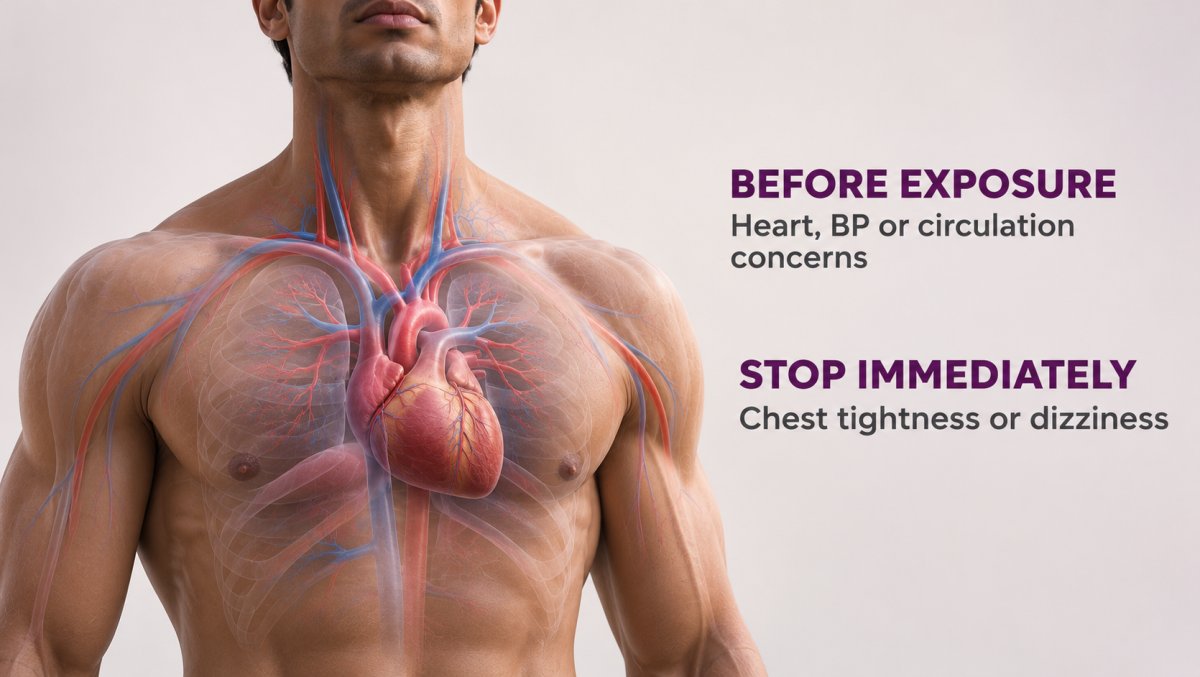
Cold immersion is a real physical stress. Tipton and colleagues call it stressful, with a significant risk of respiratory, cardiovascular and possibly nerve injury, and recommend screening first.
“Check with a doctor before you start if you have:”
- heart disease, an irregular heartbeat or a pacemaker
- high blood pressure that is not well controlled
- Raynaud's disease or past cold injury
- a seizure disorder
- claustrophobia (for chambers)
“The American College of Sports Medicine lists Raynaud's, cardiovascular disease and uncontrolled hypertension among its contraindications.”
“Get out right away if you have: uncontrollable gasping, chest tightness, palpitations, dizziness, or fingers that go white and numb.”
Cold shock is strongest in the first 30 seconds and can trigger heart rhythm problems. That is why slow entry and supervision matter. Read more in our post on ice bath benefits and risks for blood pressure.
What to Ask Before Paying for a Cryotherapy Chamber Session
Chamber sessions are often priced as a premium. Ask these first:
- How is the chamber cooled? The FDA flagged liquid nitrogen as a low-oxygen risk.
- Is there a health screen before the session? There should be, with heart and blood pressure questions.
- Who is in the room? A trained person should stay present.
- What are the temperature and time, and who monitors them?
- What study supports each claim? The Cochrane review looked at exercise recovery only.
- What is the price per session, and what does a tub of cold water cost by comparison?
If a clinic cannot answer these clearly, walk away.
The Bottom Line
- Cold water has the stronger, if modest, evidence for soreness.
- Whole-body cryotherapy has not been shown to beat it.
- Skip cold after strength training, and screen your heart and blood pressure first.
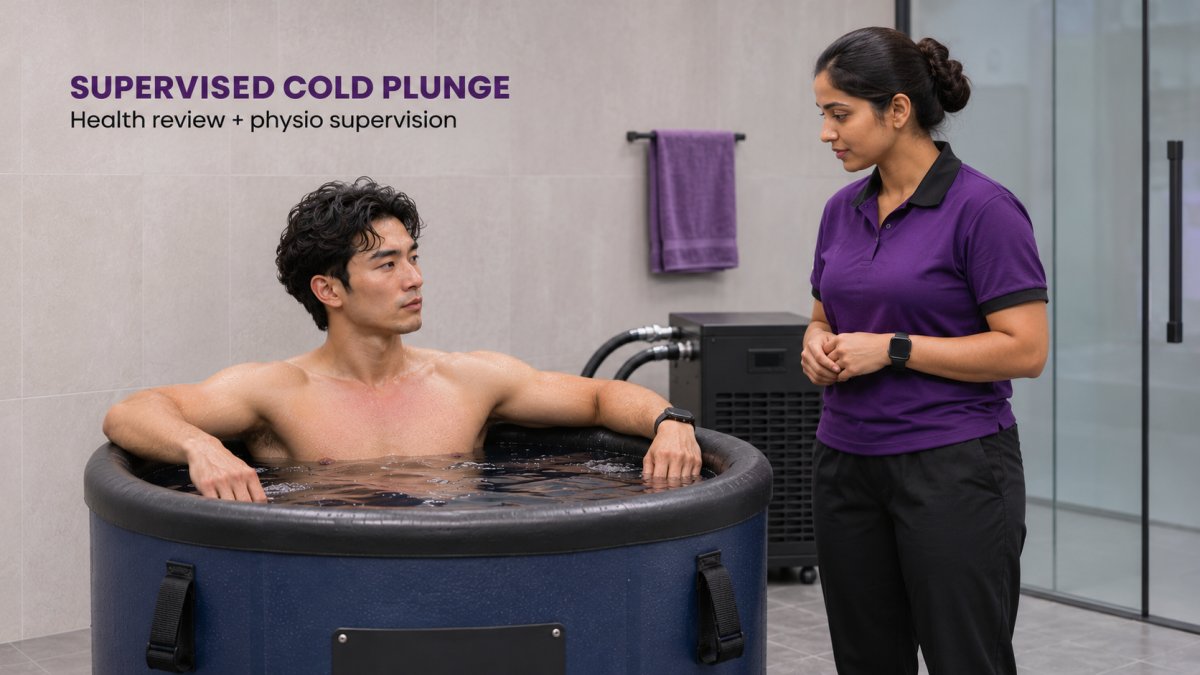
At R3BOOT in Dadar East, cold plunge is part of a supervised contrast therapy protocol. Every session starts with a health review, and our physiotherapy team stays present. A Half Cycle (30 minutes) is ₹2,500 and a Full Cycle (60 minutes) is ₹3,500. See our supervised ice bath page or contact us at +91 97023 68612 to book. Thinking of a tub at home? Compare it in our guide to an ice bath tub at home vs a supervised session.